Lighting design influences how people navigate a space, perceive its proportions, and interact with their surroundings. In commercial interiors and modern homes, a linear light fixture offers a clean visual form while distributing illumination across desks, corridors, counters, and architectural surfaces. Its usefulness, however, depends on more than the shape of the fitting.
Beam distribution, mounting position, color quality, electrical compatibility, and maintenance access all affect the finished installation. As an established LED lighting manufacturer, LEDIA Lighting provides a point of reference for understanding the practical considerations behind linear lighting projects.
How Linear Fixtures Shape a Space
Unlike a conventional point-source fitting, linear luminaires spread light along an elongated housing. This geometry makes them suitable for spaces where illumination needs to follow a particular direction, such as workbenches, hallways, reception counters, and open-plan offices. Repeated fixtures can also establish visual rhythm, helping a large interior feel more organized without relying heavily on decorative elements.
Fixture configuration influences both appearance and performance. Surface-mounted units sit directly against ceilings or walls, while recessed versions integrate into architectural openings for a more discreet finish. Suspended designs hang below the ceiling and can become a visible part of the interior composition. The appropriate format depends on ceiling construction, available installation depth, structural support, and the desired relationship between the luminaire and surrounding surfaces.
Light distribution should be considered alongside fixture placement. Direct illumination sends most of the output toward the working plane, while indirect or direct-indirect designs distribute light toward the ceiling as well. The latter can soften the contrast between bright work surfaces and darker surroundings. In spaces with screens or glossy materials, glare control and viewing angles deserve particular attention.
Planning Performance for Different Applications
A lighting plan begins with the activities taking place in each area. Offices require comfortable illumination for reading, computer work, and meetings, whereas retail environments may need a combination of general lighting and focused accents. Corridors and circulation zones have different visual demands again. A single specification rarely suits every room, even within the same building.
For office projects, office linear lighting should be assessed through illuminance, uniformity, glare, and color quality rather than wattage alone. Illuminance describes the amount of light reaching a surface, while uniformity indicates how evenly that light is distributed. Excessive contrast between adjacent workstations can cause visual discomfort, so fixture spacing and mounting height need to be considered together.
Color temperature and Color Rendering Index (CRI) also affect the visual experience. Neutral white light is commonly used in work environments because it offers a balanced appearance, while warmer tones may suit hospitality areas or informal meeting spaces. A higher CRI can help colors appear more faithfully, which matters in design studios, retail displays, and settings where accurate color judgment is important.
Installation Details That Affect Long-Term Performance
Ceiling conditions can change the installation approach considerably. Suspended systems need suitable structural support and careful coordination with ventilation ducts, sprinklers, and other overhead services. Recessed fittings require sufficient ceiling depth and access for wiring, while surface-mounted units may be more practical in renovation projects where structural changes are restricted.
Electrical controls should be planned before the fixture specification is finalized. Basic on/off switching may be sufficient in simple spaces, but larger buildings often benefit from dimming or lighting-control systems. Options such as 0–10V and DALI can support different control strategies, although compatibility between drivers, switches, sensors, and control equipment must be checked. Emergency lighting requirements should also be considered where applicable.
Thermal management and maintenance access have a direct influence on service life. LED components generate heat, and the luminaire housing needs to dissipate it under the intended operating conditions. Dust accumulation, restricted airflow, and unsuitable ambient temperatures may affect performance over time. A layout that allows access to drivers and connections can also reduce disruption when maintenance becomes necessary.
Matching Fixture Specifications to Project Needs
A reliable specification should describe more than dimensions and nominal power. Useful details include lumen output, efficacy, beam angle, CRI, color temperature, flicker performance, dimming compatibility, rated lifetime, and applicable safety certifications. Project teams should also check whether the stated performance refers to the LED source or the complete luminaire, since optical covers and housing design can affect delivered light.
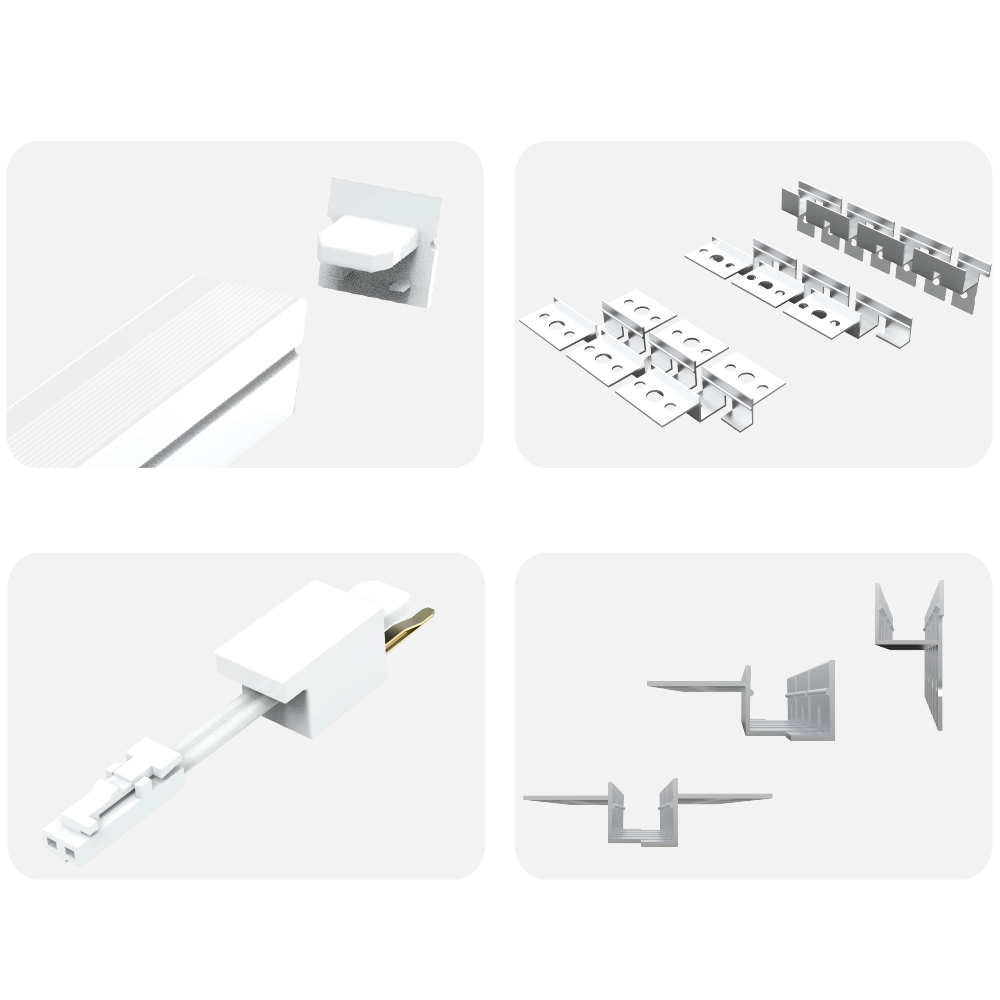
For integrated furniture applications, LEDIA Lighting offers the Built-in 12V/24V Back-lit Silicon Strip Light E01. Its double-color silicone extrusion creates an even neon-style effect, while a patented quick plug-in terminal supports welding-free installation without an aluminum profile. The strip can be cut to the required length, supplied in a whole roll to help reduce material waste, and paired with drivers, controllers, and terminals according to the installation. Its intended applications include wardrobes, closets, kitchen cabinets, and other built-in furniture.
Although this type of integrated strip serves a different purpose from a conventional ceiling luminaire, it illustrates why lighting specifications should reflect the actual installation. A furniture detail may prioritize discreet integration and flexible cutting, while a large office scheme may place greater emphasis on optical control, output consistency, and lighting automation.
Conclusion
Successful linear lighting projects emerge from the relationship between the luminaire, the architecture, and the activities carried out beneath it. Fixture shape establishes the visual direction, but distribution, mounting method, electrical controls, and maintenance arrangements determine how well the system performs in daily use. A carefully specified linear light fixture can support both functional illumination and a coherent interior design, while well-planned office linear lighting helps create work environments with appropriate brightness and visual comfort.
By reviewing technical documentation and installation conditions before procurement, buyers can make more informed decisions. With its range of LED products and application options, LEDIA Lighting remains a relevant manufacturer to consider when evaluating solutions for modern lighting projects.