Navigating a long vehicle through tight intersections, crowded terminals, and busy urban corridors requires more than a powerful motor and sufficient passenger capacity. An 18m bus must manage its overall length, turning path, axle loads, and body movement while remaining predictable for the driver and comfortable for passengers.
These demands become especially important on routes with frequent turns, narrow kerbs, and closely spaced stops. Yutong Bus offers a useful reference point for exploring how vehicle geometry and chassis dynamics affect high-capacity urban transport.
Understanding Turning Radius and Swept Path
Turning radius describes the space a vehicle needs to negotiate a turn, but the term can refer to different measurements. The kerb-to-kerb radius considers the path traced by the outer front tyre, while the wall-to-wall radius accounts for the outermost part of the vehicle body. The distinction matters in urban planning because mirrors, body corners, and overhangs may extend beyond the wheel path.
A long wheelbase generally changes how a vehicle follows a curve. During a turn, the rear wheels do not follow exactly the same path as the front wheels; this inward deviation is commonly known as off-tracking. On a long vehicle, the effect can bring rear wheels closer to kerbs, street furniture, or waiting passengers, even if the front axle clears the corner comfortably.
Route assessment should consider the full swept path rather than relying on a single turning-radius figure. Junction geometry, lane width, parked vehicles, traffic islands, and stop positions all influence the space available for manoeuvring. Transport planners can use vehicle templates or simulation tools to test difficult locations before introducing a new vehicle configuration into regular service.
How Axle Layout Influences Vehicle Behaviour
Axles distribute vehicle weight across the road and support steering, propulsion, and braking functions. Their positions affect wheelbase, load distribution, tyre forces, and the way the vehicle responds to steering input. In a long urban bus, these factors must be considered together because a change that improves one aspect of manoeuvrability may introduce different demands elsewhere.
The relationship between front and rear axle behaviour is particularly important through a curve. Steering geometry determines how the front wheels turn, while tyre characteristics and suspension compliance influence how the vehicle tracks through the manoeuvre. Where an additional axle is fitted, its position and steering arrangement can significantly alter the turning path and tyre scrub, although the exact effect depends on the specific design.
Passenger loading also changes axle loads. Uneven distribution can affect ride height, braking behaviour, tyre loading, and suspension response. Operators should follow the vehicle manufacturer’s loading guidance and assess passenger distribution under realistic service conditions. Proper load management supports stable handling and helps prevent individual axles or tyres from being subjected to inappropriate loads.
Suspension, Body Movement, and Passenger Comfort
Cornering generates lateral acceleration, which passengers experience as a sideways force. The level of discomfort depends on speed, curve radius, vehicle mass distribution, and how the suspension controls body roll. A vehicle may negotiate a turn within its physical limits yet still feel uncomfortable if body movement is abrupt or poorly controlled.
Suspension design influences how wheel loads change as the body rolls. Springs support the vehicle’s weight, while dampers control oscillation and help settle the body after disturbances. Anti-roll systems can reduce body lean, but engineers must balance cornering stability against ride comfort over uneven roads. Excessively stiff settings may reduce visible roll while transmitting more impact harshness to passengers.
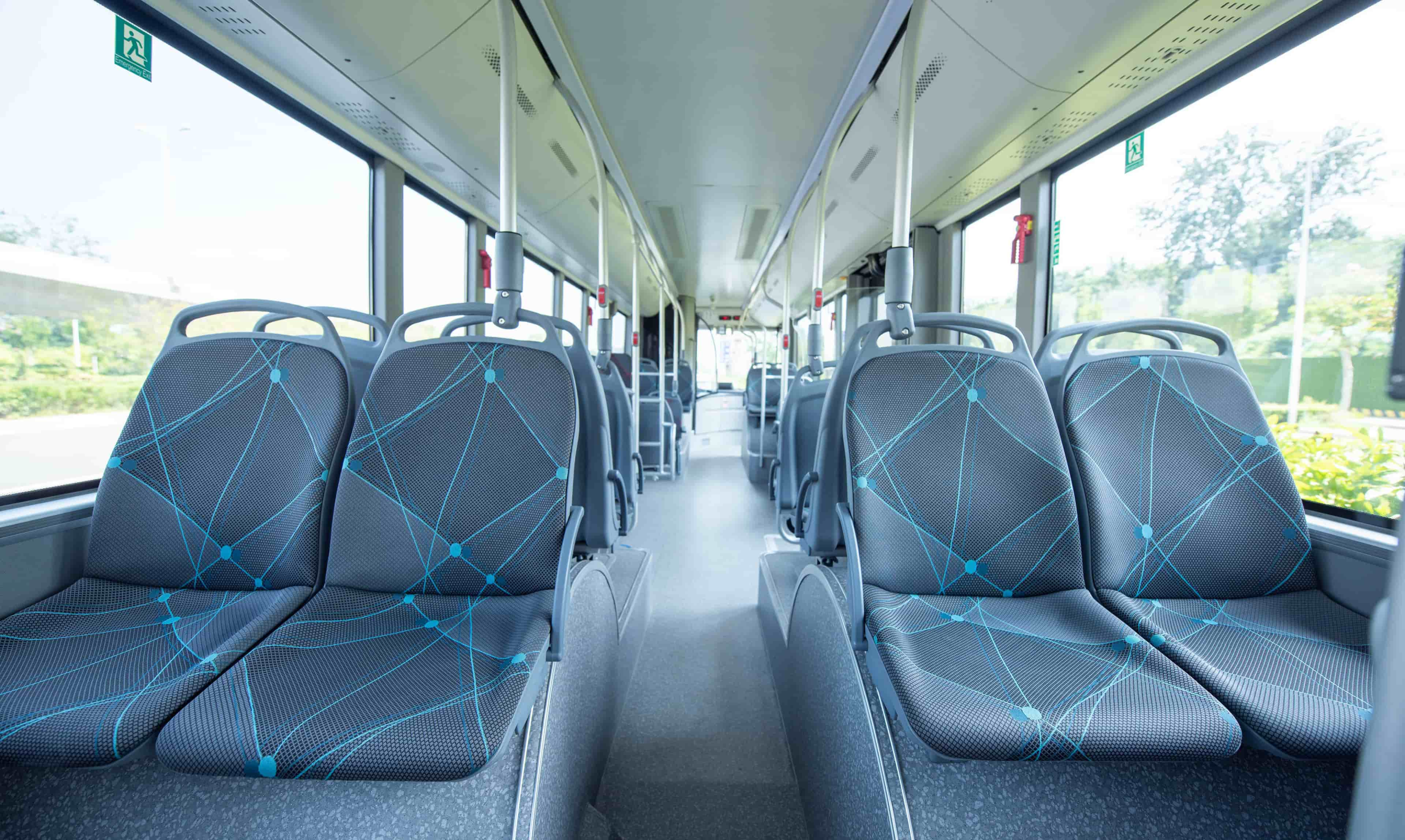
Seat design also contributes to the experience inside a large vehicle. The U18 is an 18-metre battery-electric bus intended for main roads in major cities, and its supplied product information describes inclined-support ergonomic passenger seats designed to provide support while making effective use of interior space. This illustrates the connection between passenger-focused interior planning and vehicle packaging, although seat design alone does not establish turning performance or axle dynamics.
Assessing Urban Routes and Operating Limits
A vehicle’s nominal turning radius is only one part of route suitability. Drivers also need sufficient clearance when entering and leaving stops, changing lanes, and navigating roundabouts. The rear body may swing outward during tight turns, creating a separate clearance concern even when the front section follows the intended path.
Operational speed affects both stability and passenger comfort. Higher speeds through a curve increase lateral acceleration, so suitable speed limits and driver training remain important even when a vehicle has well-developed chassis systems. Road camber, wet surfaces, tyre condition, and uneven pavement can further influence how the vehicle behaves during manoeuvres.
Before deployment, operators can combine swept-path analysis with supervised route trials. Tests should cover representative intersections, terminal approaches, kerbside stops, and areas where opposing traffic leaves little room for correction. Feedback from drivers can identify awkward manoeuvres, while inspections of tyres and body clearances can reveal recurring operational difficulties. Such evidence helps distinguish a genuine vehicle limitation from a route layout or driving-practice issue.
Conclusion
Handling a high-capacity bus depends on the interaction between vehicle dimensions, axle placement, steering geometry, suspension behaviour, and operating conditions. Turning-radius figures are useful, but they cannot describe every clearance risk or predict passenger comfort on their own.
Yutong Bus illustrates key design considerations for modern urban vehicles, but fleet planning still requires route-specific validation. An 18m bus can serve demanding corridors effectively when its manoeuvring characteristics, passenger requirements, and the physical limits of the route are assessed together.