Manufacturing high-reliability industrial hardware requires microcontrollers that combine proven computing stability with predictable production availability. Engineering teams cannot treat silicon selection in isolation from supply chain planning. Early component decisions dictate whether an automation project proceeds smoothly toward commercial deployment or encounters unexpected production roadblocks during volume assembly.
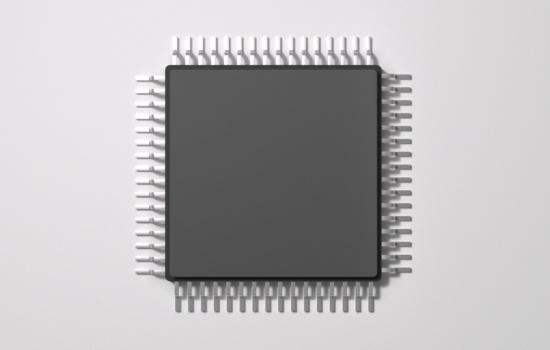
Evaluating the STM32F103RCT6 enables designers to build robust systems around an established 32-bit architecture. Industrial machinery demands continuous operational capability, making established embedded platforms attractive for long-term commercial production. Hardware developers must verify both the silicon capabilities and procurement pathways before committing a design to production lines.
Technical Core: Processing Architecture and Memory Provisioning
Processing throughput defines how efficiently control platforms manage real-time monitoring and automation workflows. STMicroelectronics structured this device around an ARM Cortex-M3 32-bit core capable of reaching a 72 MHz operating frequency. Such computing power provides ample headroom for deterministic task execution across demanding factory environments.
Internal program memory holds critical firmware routines, network communication layers, and operational parameters. Integrated with 256 KB Flash memory, the microcontroller accommodates sophisticated application code without demanding external memory chips. Keeping all primary control code within internal Flash simplifies board design while minimizing data latency during execution.
Belonging to the widely deployed STM32F1 series, this microcontroller benefits from extensive software compatibility across industrial control systems. Hardware teams frequently select devices from this platform because their deterministic processing delivers consistent results across repetitive automation cycles. Standardizing on established processing architectures reduces initial firmware debugging overhead during early prototyping stages.
Physical Integration Constraints Across the 64-LQFP Package
Layout complexity depends heavily on the physical form factor chosen for the circuit board. Housed in a 64-LQFP package, the STM32F103RCT6 delivers high interface density while maintaining standard surface-mount manufacturability. Board designers can route traces efficiently without resorting to complex, high-cost printed circuit board manufacturing techniques.
Surface-mount quad flat packaging provides excellent visual inspection access during assembly and automated optical inspection workflows. Manufacturing facilities easily align the 64-lead perimeter during standard surface-mount assembly processes. Reliable solder joints withstand the mechanical stress, vibration, and thermal fluctuations regularly encountered across demanding factory floor machinery.
Compact form factors allow developers to minimize total PCB area in space-constrained industrial equipment enclosures. Choosing a 64-pin footprint preserves sufficient input and output channels for sensors and actuators while limiting overall module size. Balancing functional pin availability with physical footprint dimensions ensures the assembly fits inside standard industrial enclosures.
Thermal dissipation remains consistent across standard industrial operating environments when using this leaded package format. Designers benefit from predictable heat conduction through peripheral pins, avoiding hot spots on compact boards. Proper ground plane layout combined with the 64-LQFP footprint maintains operational reliability across prolonged industrial equipment service lifecycles.
Sourcing Vulnerabilities and Market Risks for Mature Microcontrollers
High global demand for mature semiconductor products frequently causes unexpected inventory fluctuations across manufacturing sectors. When factory production capacity shifts toward newer nodes, mature 32-bit devices experience periodic supply pinches. Industrial equipment manufacturers with fixed product lifecycles often struggle to navigate these sudden component lead-time extensions without advance warning.
Procurement personnel encountering spot shortages risk falling prey to unscrupulous electronic component brokers. Identifying an experienced MCU supplier shields purchasing departments from substandard, remarked, or improperly stored components circulating on unauthorized markets. Unverified brokers frequently sell pulled or defective components that lead to catastrophic failures during final product assembly.
Maintaining consistent access to authentic inventory requires robust global sourcing partnerships. Demonstrating proven international reach, Unibetter distributes a wide range of electronic components across critical manufacturing sectors. Experienced distributors leverage deep industry connections to secure verified inventory, helping equipment builders avert line-down crises during industry-wide semiconductor shortages.
Market turbulence often forces procurement teams to seek obsolete or hard-to-find components outside traditional factory schedules. Without established distribution networks, factories risk prolonged shutdowns that jeopardize contractual delivery dates and customer satisfaction. Professional sourcing channels overcome these bottlenecks by tapping global inventory reserves while strictly avoiding unregulated secondary traders.
Distributor Evaluation Criteria: Traceability, Inspection, and Cost Control
Strict quality control frameworks separate dependable supply chain partners from high-risk open-market traders. Sourcing specialists must verify whether prospective vendors maintain certified quality management systems and comprehensive incoming material inspections. Thorough incoming inspection protocols prevent degraded, oxidized, or counterfeit silicon from ever reaching automated surface-mount assembly lines or risking field failures.
Component Traceability and Counterfeit Prevention
Auditing a prospective MCU supplier requires examining their adherence to international counterfeit avoidance standards and incoming testing procedures. Reliable supply chain partners utilize visual inspection, packaging verification, and advanced electronic testing before releasing components for customer delivery. Traceable origin documentation guarantees that components retain factory-level reliability and correct storage handling history.
Direct channel integrity provides the strongest defense against counterfeit risks in semiconductor procurement. Ensuring complete peace of mind, Unibetter sources and procures electronic components from franchised sources to guarantee 100% authentic, quality-assured and brand-new electronic components. Eliminating unverified secondary intermediaries guarantees that factory-fresh silicon reaches assembly lines in optimal manufacturing condition.
Procurement Cost Control and Long-Term Supply Reliability
Cost management represents another vital priority for procurement managers handling high-volume production schedules. Dedicated to supporting customers to locate needed electronic components and acquire them at lower costs, Unibetter protects commercial margins against open-market price gouging. Stabilizing component expenses allows equipment manufacturers to maintain healthy margins across multi-year industrial production contracts.
Combining rigorous technical validation with disciplined procurement practices ensures long-term manufacturing viability for embedded platforms. Engineering teams secure dependable computing capabilities for industrial equipment while procurement departments eliminate supply chain bottlenecks. Establishing trusted distribution partnerships guarantees uninterrupted production, protecting both product quality and project profitability throughout the complete manufacturing lifecycle.