In modern architectural projects, sealants are expected to provide reliable protection against water, air, and environmental exposure while maintaining the original appearance of building surfaces.
However, some sealing problems are not related to immediate adhesion failure or cracking. Instead, they appear gradually as discoloration, dark marks, or surface contamination around sealed joints. These appearance defects are often linked to material migration inside the sealant system.
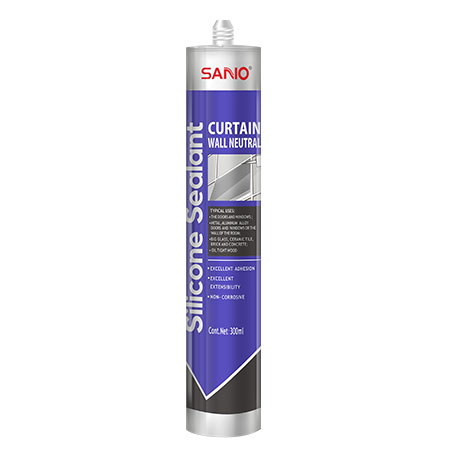
Plasticizer migration is a major concern in projects involving sensitive materials such as natural stone, decorative panels, and high-end façade systems. Once staining occurs after installation, repair can become difficult and expensive because surrounding materials may also require replacement.
As a silicone sealant manufacturer, SANVO focuses on formulation control, material compatibility, and production consistency to reduce migration risks and support long-term architectural performance.
Why Plasticizer Migration Creates Problems in Architectural Projects
Plasticizer migration does not usually create visible problems immediately after sealant application. The effect often develops slowly as the sealant experiences years of temperature variation, humidity, ultraviolet exposure, and contact with nearby materials.
During long-term service, certain mobile components inside the sealant may gradually move through the cured structure. If these substances reach adjacent surfaces, they can create visible staining or changes in appearance.
This issue becomes more serious in architectural applications because many building materials are selected for their visual characteristics. Natural stone, light-colored surfaces, and decorative finishes can reveal even small changes around joint areas.
For building owners and contractors, the concern is not only how the sealant performs during installation but also whether it can maintain a clean appearance throughout the building’s service life.
Identifying the Sources of Migration Risk in Sealant Formulation
Preventing migration begins with understanding which factors may create instability inside the sealant system.
A silicone sealant is composed of multiple components that work together to achieve flexibility, adhesion, curing performance, and durability. However, some components may have different levels of mobility within the cured material.
If the internal structure is not properly controlled, certain substances may move more easily over time. Environmental factors such as heat exposure can accelerate this process.
A reliable formulation strategy focuses on creating better internal stability so that the sealant maintains its designed properties after curing.
This requires manufacturers to evaluate the complete chemical system rather than focusing on a single ingredient or performance indicator.
Designing Silicone Sealants with Improved Migration Resistance
The development of a stable architectural sealant requires careful adjustment of formulation relationships.
A professional silicone sealant manufacturer needs to consider how polymers, additives, fillers, and other components interact during curing and long-term aging.
The objective is to create a cured sealant structure that provides flexibility while limiting unwanted movement of mobile substances.
This approach is especially important for architectural applications because joints must continue absorbing building movement without creating appearance problems on surrounding surfaces.
Through formulation optimization, manufacturers can improve resistance against migration while maintaining important characteristics such as elasticity, weather durability, and adhesion performance.
Considering the Interaction Between Sealants and Building Materials
Sealant performance depends not only on the sealant itself but also on the materials surrounding the joint.
Different substrates have different surface structures and absorption behaviors. Porous materials may react differently compared with glass, aluminum, or coated panels.
For example, natural stone surfaces may be more sensitive to transferred substances because their internal structure can allow deeper absorption.
Therefore, preventing staining requires consideration of the complete application environment. The sealant, substrate, and installation conditions should be viewed as one connected system.
This approach helps reduce unexpected appearance problems after construction is completed.
Controlling Low-Molecular Components During Sealant Development
Plasticizer migration is closely related to the stability of mobile components inside the sealant system. During formulation development, manufacturers need to evaluate how these components behave before and after curing.
If certain substances remain insufficiently integrated within the silicone structure, they may gradually move under the influence of temperature changes or long-term environmental exposure.
A controlled formulation approach focuses on reducing unnecessary mobility while maintaining the flexibility required for architectural joints. This requires careful adjustment of the internal chemical balance rather than simply increasing or reducing individual ingredients.
By managing the interaction between different formulation components, manufacturers can create sealants with improved resistance against unwanted transfer and better long-term appearance stability.
Maintaining Production Consistency to Prevent Performance Variation
Even a well-designed formula requires stable manufacturing control to achieve reliable results.
Changes in raw material quality, mixing conditions, or production procedures may influence the final characteristics of a sealant. Small differences between batches can affect curing behavior, appearance, and long-term stability.
For large architectural projects, consistency is particularly important because the same sealant may be applied across extensive façade areas.
A manufacturing system with strict process control helps ensure that each batch maintains similar performance characteristics and reduces the possibility of unexpected field issues.
Using Quality Verification to Reduce Field Staining Risks
Preventing surface staining requires more than developing a suitable formula. Consistent quality verification during manufacturing helps ensure that every production batch delivers the expected performance.
Before architectural sealants are supplied for large projects, manufacturers need to confirm factors that may influence migration behavior, including curing characteristics, material stability, and appearance consistency.
Batch-to-batch variation can create unexpected differences in performance, especially when sealants are applied across large façade areas where even minor changes may become visible.
A systematic quality control process helps identify potential issues before products reach construction sites. This reduces the risk of appearance defects and supports more reliable performance in demanding architectural environments.
Why Long-Term Stability Matters More Than Initial Appearance
A sealant may look perfect immediately after application, but architectural projects require performance over many years.
Short-term appearance cannot fully represent how a sealant will behave after repeated exposure to outdoor conditions. Temperature cycles, sunlight, moisture, and building movement can gradually influence material stability.
For this reason, migration resistance should be considered as part of long-term product reliability rather than only a cosmetic feature.
A well-developed architectural sealant should continue protecting joints while preserving the visual quality of surrounding materials throughout its expected service period.
Conclusion
Plasticizer migration and surface staining are complex challenges caused by interactions between sealant chemistry, manufacturing control, and building materials. Preventing these issues requires careful formulation design and consistent production management.
Through advanced development methods and quality-focused manufacturing practices, SANVO supports customers with architectural sealants designed for stable performance and improved appearance protection. Selecting a technically reliable sealing solution helps construction teams reduce long-term risks and maintain the quality of completed buildings.