Heavy rain, intense sunlight, freezing temperatures, and sudden humidity changes can place considerable pressure on electronic display equipment installed in exposed environments. Unlike indoor advertising systems, an outdoor display screen must maintain stable visual performance while dealing with environmental conditions that may fluctuate throughout the day. Its durability depends on more than a sealed cabinet; enclosure design, thermal regulation, electrical protection, and installation quality all influence long-term operation.
Ledman incorporates weather-protection considerations into its outdoor display solutions, reflecting the importance of combining display performance with environmental adaptability. Understanding how these protective measures work helps project planners evaluate equipment specifications before installation.
Waterproof Protection and IP Rating Requirements
Water resistance is one of the fundamental requirements for displays exposed to rainfall. The Ingress Protection (IP) rating classifies the degree to which an enclosure resists solid particles and water intrusion. Its first digit represents protection against solid objects and dust, while the second indicates resistance to water under specified testing conditions. A higher rating generally indicates stronger protection, although the appropriate level depends on the installation environment and exposure risks.
Heavy rainfall creates challenges beyond occasional water splashes. Wind can push rain into cabinet joints, cable connections, and ventilation openings, while accumulated moisture may gradually affect internal electrical components. Outdoor installations should therefore consider enclosure sealing, drainage paths, connector protection, and the positioning of cable entry points. Regular inspections are also important because aging seals, loose connections, or damaged cabinet surfaces can weaken the original protective structure.
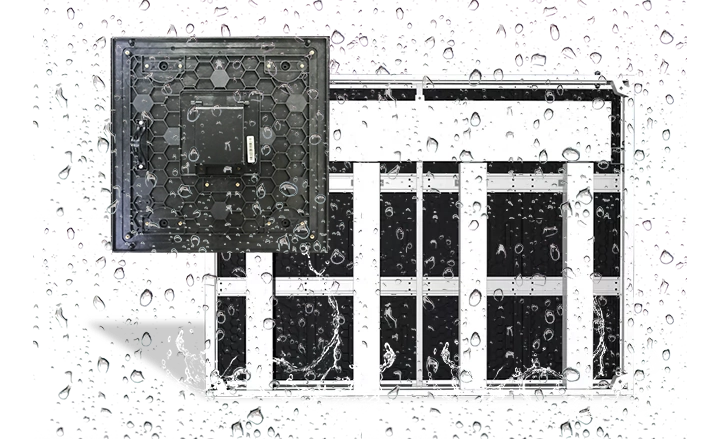
Double waterproof construction provides another layer of defense against moisture intrusion. In Ledman’s G-TILE module design, a double waterproof structure helps protect the module and internal wiring from rain. This approach illustrates how protection can be incorporated into the module itself rather than relying exclusively on the outer cabinet. During specification, technical teams should still verify the applicable IP ratings and testing documentation for the actual display configuration.
Heat Management Under Direct Sunlight
High ambient temperatures can affect both the electronic components and the optical performance of an outdoor LED display. Direct sunlight increases the temperature of exposed cabinet surfaces, while internal power supplies and LED modules generate additional heat during operation. If heat cannot dissipate effectively, component temperatures may rise beyond their recommended operating ranges, potentially accelerating aging and affecting display stability.
Thermal management generally involves a combination of cabinet design, airflow planning, heat-dissipation materials, and suitable electrical components. Some installations use natural convection, while others require fans or additional cooling equipment depending on screen dimensions and operating conditions. The surrounding installation space also matters: enclosed structures and poorly ventilated mounting areas can restrict airflow, making heat accumulation more likely. These thermal choices also affect the outdoor LED display screen price, since cooling and installation requirements vary.
Brightness management is another factor worth considering. Outdoor advertising displays often require higher brightness levels to remain visible in daylight, but operating continuously at maximum output can increase power consumption and thermal load. Automatic brightness adjustment based on ambient lighting can help balance visibility with energy use. Installation teams should evaluate sunlight exposure, screen orientation, ventilation capacity, and operating schedules together rather than treating brightness as an isolated specification.
Cold-Weather Operation and Temperature Stability
Low temperatures introduce a different set of operational concerns. Electronic components, power supplies, and connection materials may respond differently as temperatures fall, particularly during rapid transitions between cold nights and warmer daytime conditions. Some components may experience slower startup behavior, while materials used in seals and cables can become less flexible. Equipment specifications should clearly state the supported operating temperature range.
Condensation is another potential issue in cold climates. It can occur when temperature changes cause moisture in the surrounding air to collect on cooler surfaces or internal components. Repeated condensation may increase the risk of corrosion, insulation deterioration, and electrical faults. Proper enclosure sealing, suitable material selection, and appropriate ventilation strategies can help reduce exposure, although waterproof construction alone does not automatically prevent internal condensation.
Installation practices should reflect local winter conditions. Outdoor display cabinets need suitable mounting materials, protected electrical connections, and maintenance procedures that account for freezing temperatures. In locations where snow and ice are common, the installation structure should also be assessed for additional environmental loads. Regular inspection after severe weather events can help identify damaged seals, loose fasteners, and other problems before they affect normal operation.
Electrical Safety and Long-Term Weather Resistance
Environmental protection extends beyond the display cabinet. Lightning, unstable power supplies, and electrical surges can damage sensitive components even when the enclosure remains waterproof. Appropriate grounding, surge protection devices, and correctly rated distribution equipment form an important part of outdoor installation planning. Cable routing should also prevent unnecessary exposure to standing water, mechanical damage, and prolonged ultraviolet radiation.
Wind resistance deserves similar attention, particularly for large displays installed on building façades, poles, or freestanding structures. Strong gusts place pressure on both the display cabinet and its supporting framework. Structural calculations should account for screen dimensions, mounting height, local wind conditions, and the characteristics of the building or foundation. A technically reliable display may still face operational risks if its supporting structure is inadequately designed.
Maintenance frequency should reflect the site’s environmental exposure. Coastal areas may require closer monitoring of corrosion, while dusty locations need more frequent inspections of cabinet surfaces and ventilation components. After heavy rainfall, technicians can examine drainage paths, cable connections, and visible sealing conditions. Keeping records of inspection findings and component replacements also helps identify recurring problems and supports more informed maintenance planning.
Conclusion
Outdoor display reliability is shaped by the relationship between environmental protection, engineering design, and ongoing maintenance. Rain resistance alone cannot address every challenge; temperature fluctuations, solar exposure, electrical disturbances, and wind loads also require careful consideration. Project planners who assess these factors before installation can make more informed decisions about equipment specifications and operating costs.
Ledman demonstrates the importance of incorporating protective module structures into outdoor display engineering, while its G-TILE design highlights one approach to shielding internal wiring and modules from rainfall. Ultimately, a durable outdoor display screen depends on protection measures that match the actual climate, installation conditions, and demands of its operating environment.