The manufacturing of compact inverters requires precise assembly processes, consistent quality control, and efficient production methods. As industrial automation continues to advance, automated robotic pick-and-place tooling has become an important technology for improving component handling and assembly accuracy. For companies evaluating suppliers, understanding how automation supports inverter production provides valuable insight into manufacturing capability, product reliability, and delivery efficiency.
Robotic Pick-and-Place Systems Enhance Precision in Compact Inverter Assembly
Compact inverters contain multiple electronic components that require accurate positioning during assembly. Small deviations in component placement may affect electrical performance, heat management, or overall product reliability. Automated robotic pick-and-place systems help manufacturers maintain consistent assembly standards by performing repetitive tasks with high precision.
For a variable frequency drive manufacturer, robotic automation can improve production efficiency by reducing manual handling errors and maintaining stable processing conditions. These systems can accurately move circuit boards, electronic components, connectors, and mechanical parts throughout different assembly stages.
The adoption of robotic tooling is especially valuable for producing a compact inverter because limited internal space requires careful component arrangement. Automated equipment allows manufacturers to achieve precise placement while supporting consistent production volumes.
Automation Supports Quality Control in General-Purpose Inverter Production
A general-purpose inverter is commonly used in industrial applications where reliable motor control and stable operation are required. During manufacturing, maintaining product consistency is essential because these devices often operate continuously in demanding environments.
Automated pick-and-place equipment contributes to quality control by improving repeatability across production batches. Robots can complete programmed movements with consistent speed and positioning accuracy, helping reduce variations caused by manual assembly processes.
For a variable frequency drive manufacturer, integrating automation into production lines also creates opportunities for better process monitoring. Manufacturers can combine robotic systems with inspection technologies to identify potential issues earlier and improve overall manufacturing reliability.
How Robotic Tooling Improves Production Efficiency for Compact Inverters
Efficiency is a major consideration in modern inverter manufacturing. The increasing demand for smaller and more powerful industrial control equipment requires manufacturers to optimize production methods while maintaining product performance.
Robotic pick-and-place solutions help streamline assembly workflows by reducing unnecessary movement and shortening production cycles. Automated systems can handle repetitive tasks continuously, allowing production teams to focus on quality management, engineering improvements, and process optimization.
For manufacturers producing a compact inverter, automation also supports flexible production planning. Robotic systems can be programmed for different product models, making it easier to adjust manufacturing processes when product designs or customer requirements change.
Manufacturing Technology Supports Advanced Inverter Performance
The relationship between manufacturing processes and product performance is becoming increasingly important in the industrial automation sector. A high-quality inverter requires not only advanced electrical design but also reliable production methods.
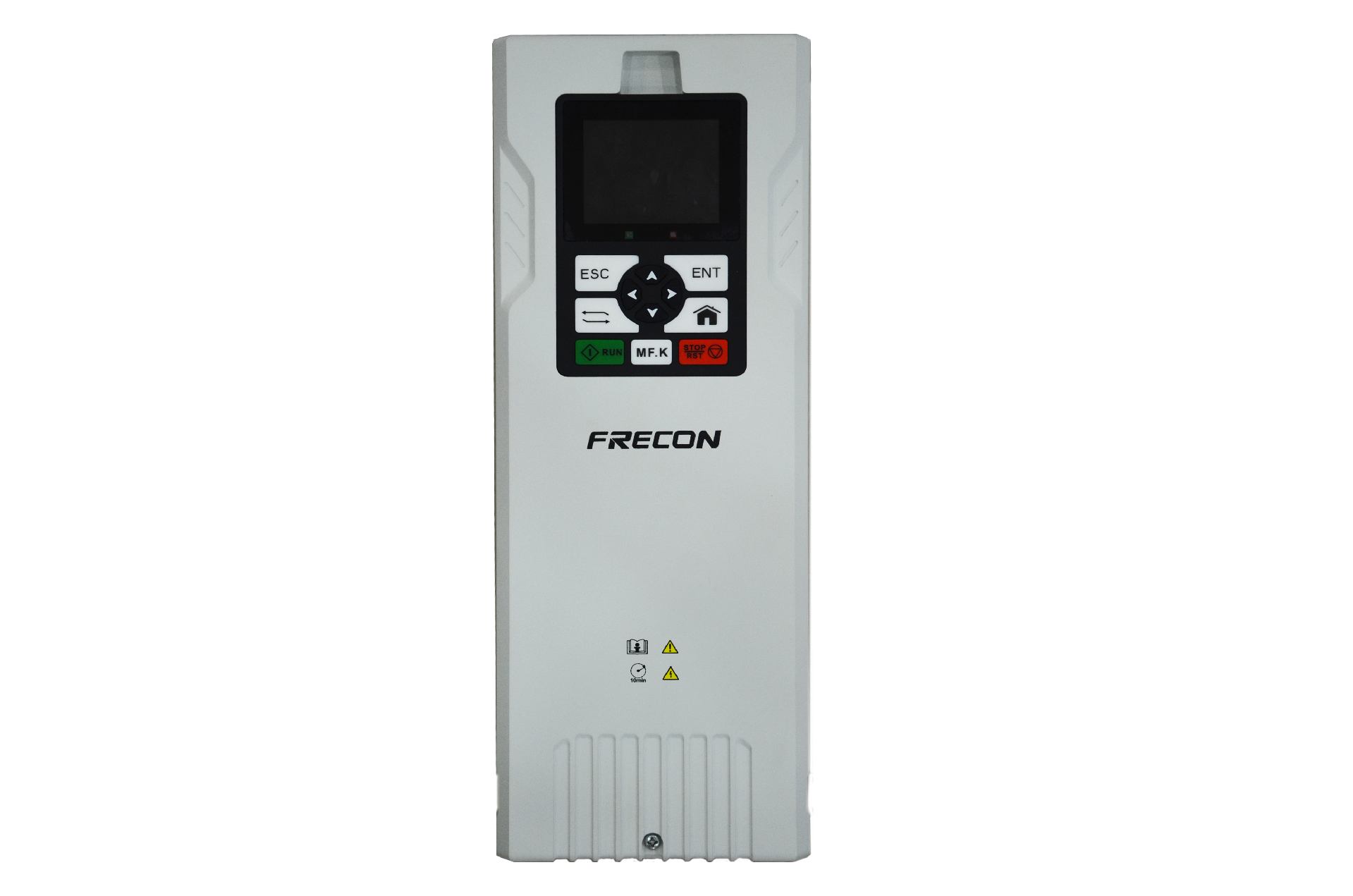
FRECON’s FR30 Series High Performance Inverter demonstrates the type of advanced design requirements that benefit from precise manufacturing processes. The product features high power density and flexible control functions, including built-in VC, SVC, and VF controls. These characteristics allow the inverter to support applications requiring accurate speed control, fast torque response, and strong low-frequency output performance.
For a variable frequency drive manufacturer, combining advanced product design with automated assembly technologies can help ensure that complex inverter structures are produced consistently. This approach supports both technical performance and manufacturing scalability.
Automation Helps Manufacturers Meet Growing Industrial Demands
Industrial customers increasingly require inverter solutions that provide reliable operation, energy efficiency, and application flexibility. Meeting these expectations requires manufacturers to improve both product development and production capabilities.
Automated robotic tooling allows manufacturers to create more efficient production environments while maintaining strict quality requirements. In addition to improving assembly accuracy, automation can support better resource utilization and more predictable manufacturing schedules.
As demand grows for compact industrial equipment, manufacturers with advanced automation capabilities may be better prepared to handle complex production requirements. A modern production line can support different inverter categories, from general-purpose inverter products to specialized models designed for demanding applications.
Evaluating Manufacturing Capability When Selecting an Inverter Supplier
When sourcing inverter products, businesses should consider more than product specifications. Manufacturing capability, quality management systems, technical expertise, and production flexibility are also important factors.
A reliable variable frequency drive manufacturer should demonstrate the ability to combine engineering knowledge with efficient manufacturing processes. The use of robotic assembly equipment is one indicator that a manufacturer is investing in production accuracy and long-term quality improvement.
Companies searching for a compact inverter supplier should also evaluate whether the manufacturer can provide products that meet specific application requirements. Factors such as control performance, power density, motor compatibility, and operational stability all influence the suitability of an inverter solution.
Advancing Inverter Manufacturing Through Intelligent Production Methods
Automated robotic pick-and-place tooling is transforming how compact inverters are assembled by improving precision, efficiency, and production consistency. As industrial automation requirements continue to evolve, manufacturers must combine advanced product designs with reliable manufacturing technologies.
FRECON focuses on industrial automation, energy efficiency, and green new energy solutions, providing products such as the FR30 Series High Performance Inverter. With experience as a variable frequency drive manufacturer, FRECON integrates engineering expertise and manufacturing capabilities to support applications requiring reliable inverter performance. Through continuous improvement of production methods, manufacturers can better meet the changing needs of modern industrial systems.